Showing posts with label meeting room. Show all posts

Tuesday, January 7, 2014

Your digital tables are safe when using nsquared software


nsquared software innately prevents the introduction of malware to your digital table whether it’s a Samsung SUR40, Windows 7 or Windows 8 PC. 
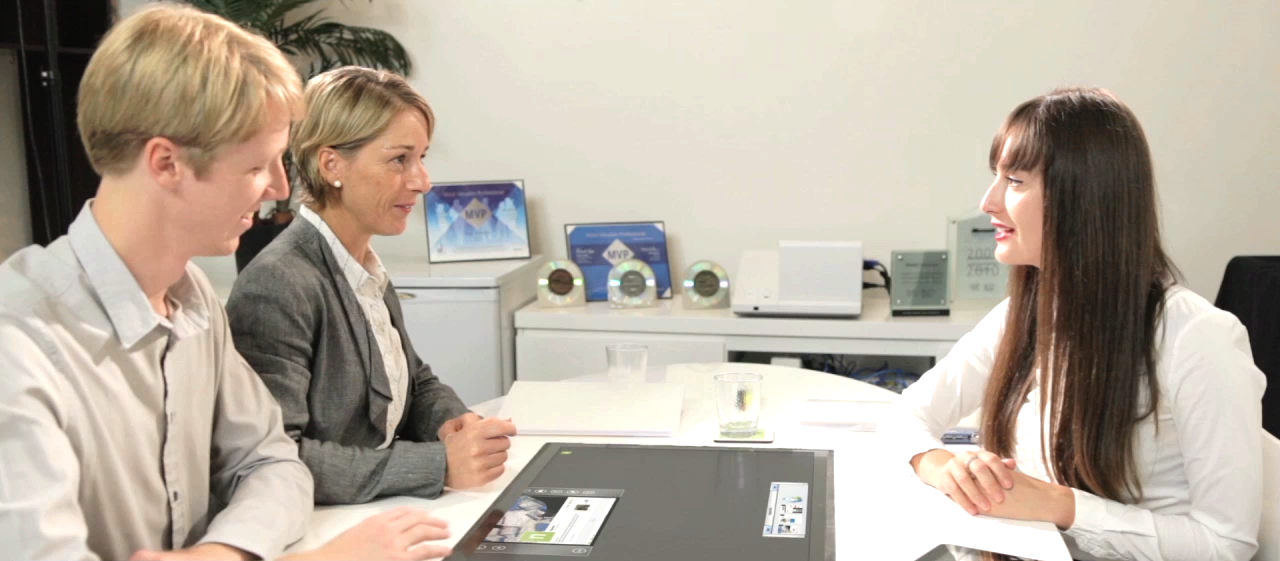

Happy people around an nsquared digital table

How does it work to prevent members, guests or students from making things crazy, I hear you ask?

It’s simple. nsquared software doesn’t display pop ups, or files that are irrelevant to the contextual case for which it’s designed.  Files that are relevant (such as images, videos, PDFs and MS Office files) are displayed as rendered images of those files, not live files, and any links are inactivated. This means that there isn’t an opportunity to click on malware executable files disguised as harmless links in Word, Excel, Powerpoint or PDF files.

nsquared maps and nsquared web, both of which display content directly from the world wide web, block pop-ups. This means that in User mode, there is no way for any of your members or guests to activate malware (or any other software) installations. 
Even if a USB stick containing malware files is introduced, the only files that will be recognized and rendered are PDFs, image and video files, and MS Office files. The software isn’t designed to seek or display other files (such as .exe files) so even if malware files are present, they won’t be recognized or rendered by the software.

When using nsquared software the security of your digital table and network is honoured by design. If you have any questions or concerns, please contact us 

Monday, December 9, 2013

You can load PowerPoint files with nsquared thoughts


PowerPoint files are everywhere in the workplace. PowerPoint is used to describe the financial position of a company, the sales pitch for a product, the concept for a new project, and countless other scenarios. With nsquared thoughts you can load those PowerPoint slide decks directly onto your digital table and annotate them as a group. Here some examples of how people are using nsquared thoughts and PowerPoint files:
  1. A sales team discusses how to improve existing presentations around their touch table.
  2. A sales person presents ideas to clients, the clients get involved with directly annotating the slides themselves
  3. A project team incorporates slides from a PowerPoint deck into a conversation involving other sketches on their digital table.
  4. A management team uses slides from their company vision PowerPoint deck to determine the validity of new project proposals.
  5. A financial team uses PowerPoint slides to discuss the quarterly results of their company subsidiaries at their digital table.
  6. An investment team discusses the different pitches they have heard each week and display the PowerPoint slides from each pitch on their table.


Saturday, September 28, 2013

Bringing Minority Report to Your Meeting Room

The first thing that comes to mind for most people when we explain what we do is, “You mean like Minority Report?”, our response is usually mixed.
When Minority Report came out in 2002, it set a precedent for the concept of future computing. In this scene, Tom Cruise is seen depicting manipulating digital content on an interactive screen through a series of remote hand gestures.
As we work with leading edge technology we often become associated with films such as this, which is great because it provides an initial context, but the interactive gesture computing we do is not science fiction.
At nsquared we believe the future of computing is in digital tabletop solutions. In the next few years digital tables will be found in common meeting space areas. We are excited by this vision and our goal to make this technology a practical reality and bring businesses into the future.
Our multi-touch, multi-user products are cutting edge and many of our customers are beginning to implement our solutions to improve their meeting spaces. Take for example, nsquared presenter allows you to creatively collaborate and deliver presentations using all the devices you find in a meeting room.
Read here how international property group, Longton is using nsquared presenter to impress clients during sales presentations.
While Minority Report was a creative work of fiction, the truth is technology like it is available today and is already being used by forward thinking organizations that want to take their businesses to the next level.
If would like to learn how you can take your meeting room to new heights email us at enquiries@nsquaredsolutions.com

Tuesday, April 16, 2013

An introduction to Digital Tables


Enhance the meeting room
conversation with a
digital table
A digital table defines an obvious meeting place, offers a true multi-user experience and enhances collaborative engagement. If you’ve started to think about purchasing a digital table then this article will help you decide what type of hardware and software you will need.

Tabletop computing and digital tables are becoming integrated into business life and work places at an increasing pace. The integration of these devices into business, education and sales spaces is largely in recognition of the increased value of collaborative activities over directed activities.

Where we’ve been using interactive whiteboards and relying on a single person to talk us through a PowerPoint presentation, we’re now engaging in higher levels of discussion for information sharing and problem solving. The technology needs to support and enhance this shift in behavior. While interactive whiteboards offer opportunities for some interaction (by one person who is often facing away from the audience) they cannot replace the humble table as a meeting place and they do not encourage face-to-face communication. 

Digital tables are obvious meeting spaces. The form factor of a table is perfect for face-to-face conversations and true multi-user experiences. The digital tabletop further supports and enhances conversations and collaboration by providing quick access to resources. Business, education and sales spaces consistently report increased engagement and long-term connection of participants interacting with digital tables, with corresponding increases in sales revenue and educational success.

Multi-user devices are designed to bring people together and help them to engage and connect at much deeper levels than they would normally. When single user devices are present, they often detract from collaborative experiences, providing distractions from the core conversation and in turn reducing the value of the conversation. Think about the differences in interactions between sitting around a dinner table and standing in front of a digital sign.

A digital table at an auto show
Microsoft released the first commercially available multi-user product, named “Microsoft Surface”, in 2008. 

Five years later Microsoft Surface’s successor, the Samsung SUR40, still provides a premium experience, though in a significantly sleeker form factor than its forebear. Following the lead of Microsoft and Samsung, various other hardware providers have also created digital tabletops. Some of them utilise vision systems and others continue with time-honoured and proven touch detection methods. Each has its benefits and drawbacks. These will be discussed briefly in the following passages.

While there is magic in the hardware, it is the software interface that will determine how the devices can be used and whether or not your space is set up for productive, engaging collaboration and discussion. The design of the software interface will determine the level of engagement and productivity that can be gained from your investment and whether or not your space is set up for true multi-user experiences. 


Multi Touch or Multi-User?

As a first step, decide what you need to achieve. Do you want to create:
  1. a space that enables people to browse digital content and discover information; or
  2. a space that enables several people to interact with each other and digital content seamlessly and simultaneously?
If you’re looking to achieve the latter, you’re looking to create a multi user space.

Digital multi-user spaces enable discussion and collaboration around digital content. To ensure that everyone around the table has equal access to what’s on the screen, you’ll require a table form factor with massive multi-touch capabilities, and a 360-degree software interface. 


How many touch points are required?


For premium experiences, we recommend that you allow for five to 10 touches per person that you plan to have around the table. That said, the decision will be highly budget dependent and for groups of two to ten people, the device and software both need to be capable of responding to a minimum of three simultaneous touches per person. This is especially true for smaller groups of two to four people. In a few cases, you might be able to get away with catering for fewer touches per person. This is generally due to the fact that as groups of adults get larger in number, less people in the group are likely to interact with the device simultaneously. Allow for three simultaneous screen touches per person at a minimum. 


Benefits of multi-user screen spaces and digital tabletops


A multi-user experience is one in which several people will be working on the same screen at the same time. A great multi-user experience can be created with a canvas where all users can face each other to directly interact while still sharing, creating and annotating digital content. Placing interactive screens horizontally, to act as the table around which the users can gather and engage, can create this digital canvas. 

In a sales meeting a digital table can help focus
people's attention on the content

The horizontal screen becomes a shared space for all the users to work together and focus on the task at hand. 


Compare this with many meeting room experiences where the participants arrive with personal devices (laptops, tablets, phones) and the activity on each device is hidden from the other people. This often leads to more distractions during the meeting as people start answering emails, chatting on IM or even other personal tasks rather than being focused on the meeting.

By keeping the people focused on the content, meetings around a digital table should be faster and more focused than those using an interactive whiteboard as the focus for the meeting.

The benefit of a table hosting the content, as opposed to a vertical screen, is that people are face to face and no one has their back to the rest of the team at any time. Vertical screens are often used for presentations, which are an exercise in pushing information out rather than creating a discussion involving everyone at the table. Horizontally mounted screens promote information sharing and problem solving better than vertically mounted screens. 


Screen Size

We consider 30” to be the minimum size required for a good experience by more than two users. Bigger is not necessarily better, once a horizontal screen gets past around 60” some areas on the screen will become hard to access by everyone sitting around the screen. Once a screen is bigger than 100” then the software needs to be designed with the consideration there will likely be an area in the center of the screen that will be hard for anyone to reach even if they’re standing. For digital tables, the most functional screen sizes are between 30 and 65 inches.


Screen orientation


For a true multi-user experience, the screen will need to be mounted horizontally like a table. This allows people to sit or stand around the device and meet as they always have, face to face around a table, and without extraneous distractions.


Placing the screen horizontally changes the way people can engage with the content.


Remember that as soon as there is any vertical component in the mounting (such as in the case of a lectern), it’s difficult to see the content on the screen from all angles and sides. Make sure that your multi-user space offers a horizontally mounted screen for multi-user engagement.


Do you want object recognition capabilities?


Do you want internal users to have quick, direct access to their own content?

Do you want to be able to place content or objects onto the table and invoke different behaviours? Do you want to be able to put your phone on the table and access specified content? If you want any of those features, you’ll need object recognition capabilities that only a vision system with camera-like functionality will provide.


Lighting

If the space has a lot of natural sunlight, or is flooded with halogen or other incandescent lighting, and the hardware you’re considering operates with an infrared vision system (such as the Samsung SUR40), you’re going to have to make some choices. 

These will most likely involve considering removing or reducing the infrared light sources by replacing halogen or other incandescent lighting with LED or CFC lighting; and (or also) the installation of physical screens like walls, or specialized infrared filtering film (3M’s PR 40 and PR 70 window films are known to block infrared sufficiently in several cases). Work with your supplier to determine what the best way forward is for you.


Software


The most important piece to the puzzle is the software. Just as the hardware needs to promote face-to-face interaction, so does the software. Whether the software is custom built or an off the shelf solution, it should always enable multiple people to interact simultaneously, and at least as they would if the table wasn’t a digital one.

Good multi-user experiences are those in which each person around the table can access the interface equally and easily no matter where they are located around the table. Everyone should be able to consider the content the right way up. No one should have to look at anything upside down. The software should automatically adjust items to the orientation of each individual viewing it.

In addition, those same people need to be able to rely on the device to respond without lag to each and every touch made. People-to people and people to digital content interactions should be intuitive, smooth, and relatively effortless.


Custom Build or Off the Shelf (OTS) Software?


The budget you have available will always be a factor for consideration. Generally speaking, off the shelf software will always be financially less taxing than having custom software built for your organization. Procurement times should also be far less for off the shelf solutions than for custom builds. As time goes on and the market for digital tables increases, it stands to reason that there will be more off the shelf solutions available.

Digital Table at Australian Museum in Sydney


There will always be cases where custom builds are required. That said, unless you already have significant experience using tabletop computers in day-to-day business activities, it’s always best to start with off the shelf offerings that provide close to what you think you need. Check the features. Many applications provide administrator tools that allow you to customize certain aspects of the application for your preferences or brand. This way you can spend time assessing whether you really need all of the features on your wish list, and whether the custom build you’d envisioned will be justified in terms of return on your investment (ROI). Good off the shelf software may be all you need and at the very least will allow you to determine your absolute requirements at significantly lower costs and delivery time frames than those associated with custom builds.


Sharing content with personal devices


People will often arrive to a meeting with content on their personal devices that they have gathered or created. A good tabletop experience will enable those people to easily transfer that content onto the digital table for the conversation. It should be a single hit transfer, where the materials being shared can be placed on the table without the need to constantly refer back to the personal device. Once the content is on the table, it is best for the personal device to be put away. Private personal devices are still an important part of the digital world and digital tables should interact with those devices in a way that promotes the content being shared when suitable. Ensure the software enables quick and easy transfer of content between personal and corporate devices where relevant use cases exist. 


Conclusion


Every situation and scenario is different, but wherever you are creating indoor spaces for people to gather in order to collaborate you can expect digital tables to enhance that experience. In the coming years you will start to see more and more digital tables emerge in meeting rooms, libraries, schools, universities and even as peoples’ work desks and in their homes.

Depending on the environment and number of people involved, different hardware options need to be considered. The software should always account for people approaching the table from any side and work seamlessly for all the participants around the table.


For More Information


If you have any more questions regarding about digital tables or which solution is right for you, contact us at nsquared:


Web: http://www.nsquaredsolutions.com 

Email: info@nsquaredsolutions.com 

AU Phone: +61 2 9262 3386 

USA Phone: +1 206 236 0354 


Tuesday, December 18, 2012

Digital Tables Everywhere


At nsquared we have a mission - to put digital tables everywhere. Everywhere there is a table there is an opportunity to enhance the experience at that table with digital content.

First and foremost a table is a gathering place for people to meet and to share ideas and experiences. By adding digital content directly to the surface of the table we are creating a space that enhances and enriches human contact because it responds easily and naturally to the physical interaction of many users, simultaneously. It’s social, and encourages people to engage. 


Three people standing around a digital table interacting with content on the table.
  A table is a place of social gathering 
Most computer interfaces are designed for individual use. We even call them personal
computers. The large vertical screens that most of us are familiar with (TVs and Cinema screens) have been places of social gathering for friends and family for some time. Yet the vertical screen experience is not socially engaging in the same way as sitting around a campfire or a dinner table. The dynamics of sitting in a circle or around a table facing other people is very different to the dynamics that exist when we all sit facing in the same direction. In fact we are taught at an early age not to talk (or socialize) when we’re all sitting and facing the same way (otherwise the teacher gets very annoyed). 


The rise of blogs, Twitter and most noticeably Facebook has shown us that people really love to connect and share their experiences with each other. Human beings are social animals. Most people share what seems to be a primal need to gather in groups to play, work and relax.

This brings us back to the objective of enhancing the socialization that occurs as we sit facing each other. By enabling digital content (which is a big part of many of our lives) to be rendered directly onto the table we can enrich the conversations and therefore the experiences of the people gathered around the table. Adding the ability for the people around the table to interact with the content at the same time creates an even more memorable and emotionally attached result. 


There are educational, business and recreational benefits to digital tables.


A group of school children standing around a digital table learning chemistry
Students learn better in groups 
Creating an environment where students can collaborate to create content or compete with each other while learning has demonstrated positive educational benefits. Students are drawn to digital
tables and subsequently and almost seamlessly into an environment that, with the right software, enhances their enjoyment of learning, encourages social interaction and creates an emotional attachment to the content. Think about the times that you have read something and then forgotten it a few days later, and then compare that with how well you
remember things when they are part of a conversation you’ve had with other people. Often you will remember the people involved and their expressions as much as the lesson learned or topic discussed. 


Three people sitting around a digital table exploring documents.
Meetings can be enhanced with a digital table 
The same rules apply to business conversations. If you are really trying to encourage a group of people to brainstorm, plan, collaborate, sell, and share then you want them facing each other and talking. People need to be looking at each other’s faces, reading body language, and listening. This is why we sit around a meeting room table when we want to find a solution to a problem, determine an action plan for a project, or make a sales pitch to a client. Current widespread behavior of bringing laptops to the meeting table and using them during the meeting (often for checking emails, sending instant messages and checking Facebook) defeats the purpose of sitting around a table to solve a problem and share ideas. Not only are the people at the meeting disengaged from each other, the
open laptop screens provide physical barriers to the conversation. 


A table that enables the display and creation of digital content is an open space that encourages people to connect socially and engage in the conversation.


Two tourists explore content while sitting at a digital table.
Digital tables create places for people to interact 
In recreational environments where searching for places of interest, building itineraries, and game playing are common activities, we can improve the experience by presenting the information in digital form on the tabletop. 

By enabling people to bring their own content and take value away from the table on their own devices, the digital table can start to provide seamless integration with familiar mobile technology and then extend the experience and engagement.


We are sure that the future for all of us will include more digital tables and a better use of technology for face-to-face social interactions. At nsquared we are proud to be pioneers of this exciting opportunity and look forward to making this dream become reality. 


Sunday, October 14, 2012

What's new in digital tables

Here is a round up of some of the new things happening with digital tabletop technology.
As developers of software and resellers of digital tabletop hardware we are constantly on the look out for the latest technology and the changes happening in this space.
At the beginning of this year (2012) Samsung released the long awaited Samsung SUR40 with Microsoft PixelSense. The team at nsquared had been working with Microsoft and Samsung for over a year prior to this release and nsquared is acting as a reseller for the SUR40 in Australia. Many of our clients are buying the SUR40 preloaded with a number of the nsquared applications.

The nsquared meeting room table

Since the launch of the SUR40 several interesting tabletop solutions have started to emerge. Working with 3M, nsquared has embedded a multi-touch screen into meeting room tables, creating a totally flat (no bezel) tabletop solution that is easy to wipe down and keep clean as well as being very robust and usable from any side of the table. More good news is coming from our work with 3M later this year as this engadget article suggests.

We are expecting a number of far smaller form factors to emerge in the coming months, driven in part by the release of Microsoft Windows 8.  The team at Sony have demonstrated the Vaio Tap 20, a 20" multi-touch (10) screen that can morph between a vertical screen and a horizontal screen. Clearly smaller than most of the screens nsquared has been working with, but it offers an entry level digital table top experience for 2 people. We are hoping to see several more solutions like this from other hardware manufacturers in the coming months.
The Sony Vaio Tap 20


So what is next ? 
There are a lot of research projects happening in the field of table top computers and we hope some of these will lead to new exciting products we can use to help build rich experiences for our customers. One that has caught our eye is the BendDesk project in Germany, a touch surface that has a horizontal and a vertical component. While not the social experience that we love about true digital tables, it still represents and interesting look at how the interactive workspace might evolve.